Champions League Format Explained: League Phase & Play-offs
The Champions League format explained: 36 teams in one league table, 8 games each, who goes straight to the round of 16, who plays the play-offs and who is out.
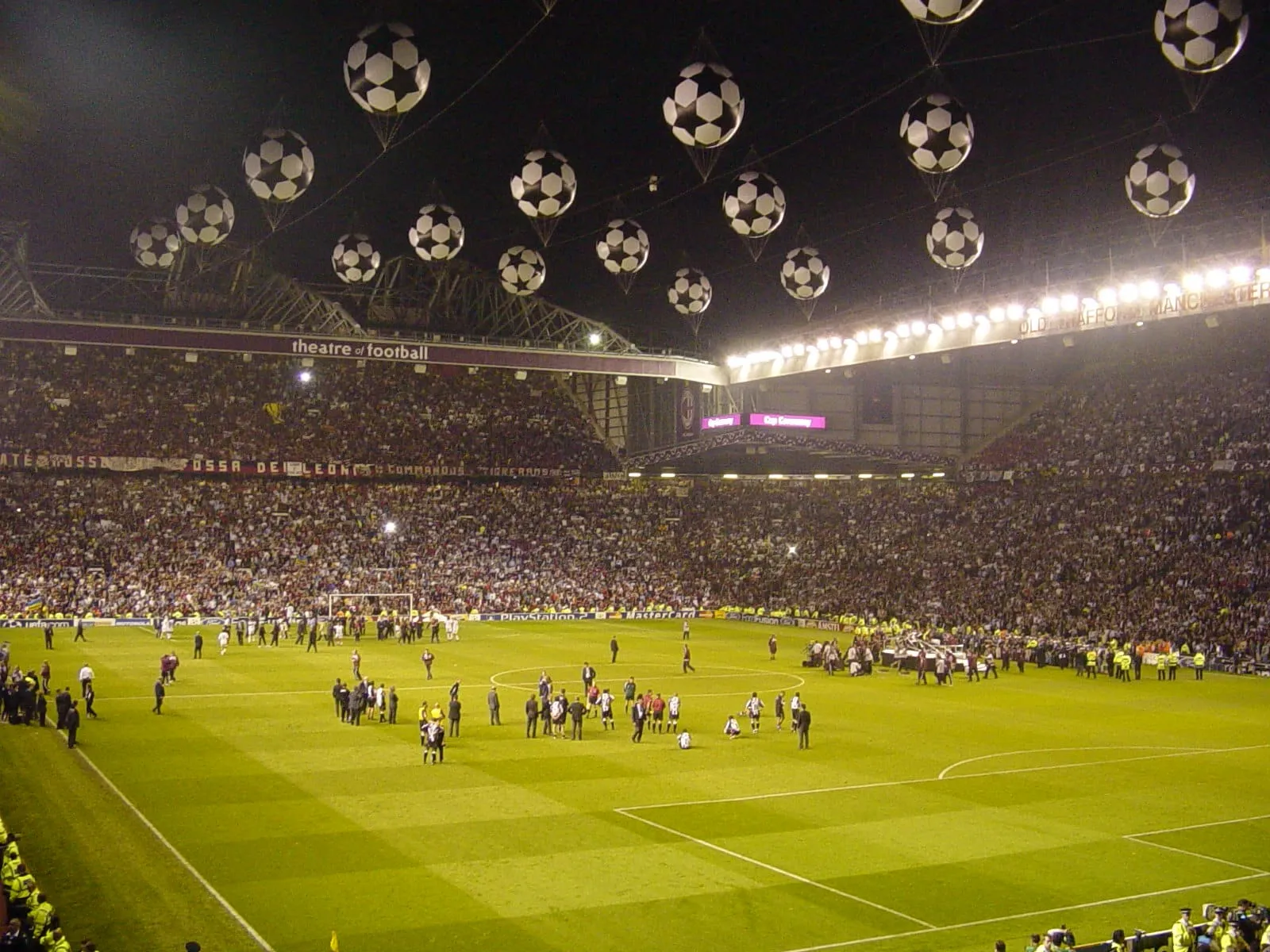
Every matchday, searches for the Champions League table spike, and plenty of fans still find it confusing. That’s because the Champions League format changed completely in 2024/25: the familiar groups are gone, replaced by a single league table of 36 clubs. Here is how the whole competition works, step by step, from the draw to the final.
A quick history: from European Cup to Champions League
The competition began in 1955/56 as the European Champion Clubs’ Cup, and was rebranded as the UEFA Champions League in 1992/93. For roughly two decades before the latest change, the format everyone knew was 32 teams split into 8 groups of 4, with the top two in each group reaching the round of 16.
From 2024/25, UEFA switched to what it calls the “league phase”, raising the number of clubs to 36 and scrapping the groups.
Champions League format explained: the league phase
The core idea is simple:
- 36 teams sit in one league table.
- Each team plays 8 matches against 8 different opponents: 4 at home and 4 away.
- No team meets the same opponent twice in this phase.
- A win is worth 3 points, a draw 1, a defeat 0.
With 8 games per team, the league phase has 144 matches in total, up from 96 in the old group stage.
| Old format | New format | |
|---|---|---|
| Teams | 32 | 36 |
| Structure | 8 groups of 4 | One league table |
| Games per team | 6 (home and away vs 3 teams) | 8 vs 8 different teams |
| First-phase matches | 96 | 144 |
How the draw works: the four pots
The 36 clubs are split into 4 pots of 9, based on UEFA’s club coefficient rankings, with the title holders placed at the top of Pot 1.
Each club is then drawn two opponents from each pot, eight in all, playing one of each pair at home and the other away. Software picks the opponents at random while respecting two rules:
- Clubs from the same country cannot meet in the league phase.
- No club can face more than two opponents from any one other country.
The result is that the biggest clubs face a mix of strong and weaker sides, and headline fixtures arrive much earlier than they used to.
How to read the Champions League league phase table
After matchday 8, the table splits into three zones:
| Position | Outcome |
|---|---|
| 1st–8th | Straight into the round of 16 |
| 9th–24th | Knockout phase play-offs |
| 25th–36th | Eliminated |
Did you know? Under the new format, there is no drop into the Europa League. In the old system, third place in a group meant a move to the Europa League; now clubs finishing 25th to 36th are out of European competition for that season.
Tiebreakers when teams are level on points
If two or more clubs finish on the same points, UEFA’s regulations separate them in this order:
- Goal difference
- Goals scored
- Away goals scored
- Wins
- Away wins
- Combined points of the opponents faced
- Combined goal difference of those opponents
- Combined goals scored by those opponents
If they are still level, further criteria follow, starting with disciplinary points based on yellow and red cards. Note that away goals still count in the table, even though they no longer decide knockout ties.
The play-offs and the round of 16
Play-offs: 9th to 24th
Clubs placed 9th to 24th play two-legged ties, with the teams ranked 9th to 16th hosting the second leg. The pairings follow the table:
- 9th or 10th vs 23rd or 24th
- 11th or 12th vs 21st or 22nd
- 13th or 14th vs 19th or 20th
- 15th or 16th vs 17th or 18th
The eight winners complete the round of 16.
Round of 16 and the knockout rounds
In the round of 16, the top eight face the play-off winners, and the higher-ranked team plays the second leg at home. The bracket is tied to the table: the top eight are grouped in pairs (1–2, 3–4, 5–6, 7–8) and the clubs in first and second are placed in opposite halves, so they cannot meet before the final.
Since 2025/26, that advantage carries further: the club ranked higher in the league phase also hosts the second leg in the quarter-finals and semi-finals. A team that knocks out a seeded side inherits its place in the bracket.
Every round from the last 16 to the semi-finals is played over two legs. UEFA abolished the away goals rule in its club competitions from 2021/22, so if the aggregate score is level, two 15-minute periods of extra time are played, followed by penalties if needed. The final is a single match at a venue chosen in advance.
Add it all up and the competition now has 189 matches from the league phase to the final.
Why did UEFA change the Champions League format?
UEFA’s argument is that a single table keeps almost every match meaningful until the last matchday, since one place can be the difference between a bye, a play-off and elimination. It also produces more big fixtures early on. Critics, on the other hand, point to the extra matches in an already crowded calendar, and to a 36-team table that takes some getting used to.
If you enjoy understanding the rules of the game itself, read our guide to the offside rule explained simply, or find out how the Ballon d’Or is decided.
Frequently asked questions
How does the Champions League work now?
Since 2024/25, 36 clubs play in a single league table. Each plays 8 matches against 8 different opponents, 4 at home and 4 away, before the knockout rounds begin.
How many teams qualify directly for the round of 16?
Only eight: the clubs finishing 1st to 8th in the table. The other eight places are decided in the play-offs.
How do the Champions League play-offs work?
Teams finishing 9th to 24th play two-legged ties, with the 9th–16th placed clubs hosting the second leg. The eight winners join the top eight in the round of 16.
Can two clubs from the same country meet in the league phase?
No. The draw keeps clubs from the same country apart in the league phase, and no club faces more than two opponents from any one other country. They can, however, meet in the knockout rounds.
Do away goals still count in the Champions League?
Not in knockout ties, where the rule was scrapped from 2021/22. Away goals scored are still one of the tiebreakers in the league phase table.
Key takeaway
The new Champions League format is one table of 36 clubs, with 8 games each. The top 8 go straight to the round of 16, 9th to 24th go into the play-offs and 25th to 36th are out. After that, it’s the classic knockout format all the way to a one-off final. Next time you check the table, look at which zone your team is in, not just its points.