Who Built Petra and When? The Nabataeans and the Rose City
Who built Petra in Jordan, and when? Meet the Nabataeans who carved the Rose City, how the Treasury was cut from rock, and how the world rediscovered it.
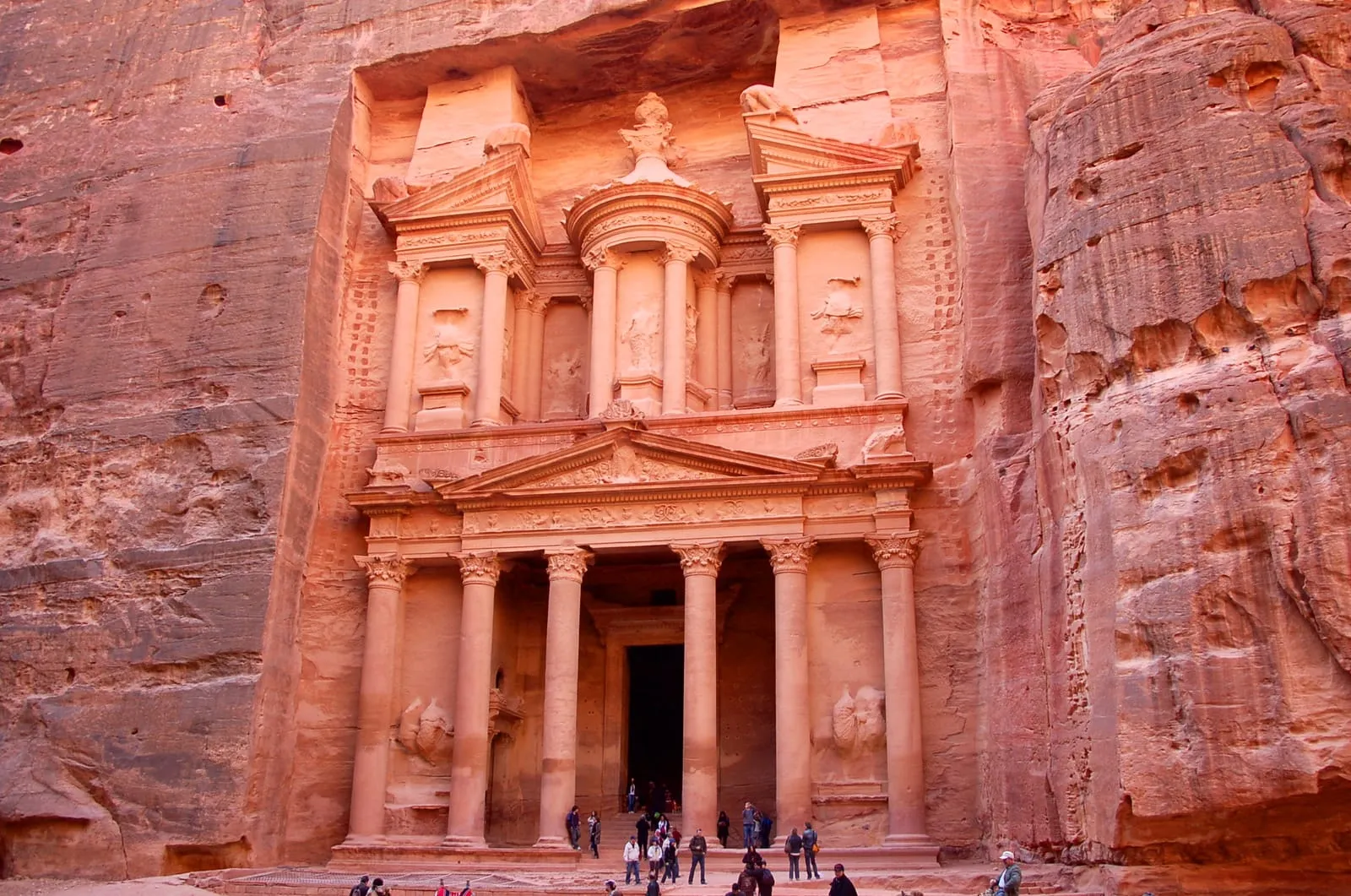
In southern Jordan, at the end of a narrow, winding rock canyon, a majestic facade suddenly appears, carved into rose-coloured stone. This is the Treasury, the most famous monument of Petra, one of the New Seven Wonders of the World. So who built Petra, and when? And how did its builders carve an entire city into the mountains?
Who built Petra? The Nabataeans
Petra was built by the Nabataeans, an ancient Arab people who lived in the southern Levant and north-west Arabia. They made Petra the capital of their kingdom and called it Raqmu. The name “Petra” is Greek and means “rock”.
The Nabataeans were famous traders. They controlled caravan routes that carried incense, spices and other valuable goods between southern Arabia, Egypt, the Levant and the Mediterranean ports. That trade made them rich, and they spent the wealth on their capital.
When was Petra built?
The Nabataeans settled in the Petra area from around the 4th century BC. The city reached its peak between the 1st century BC and the 1st century AD, when its most famous facades were carved.
| Event | Approximate date |
|---|---|
| Nabataeans settle in the area | Around the 4th century BC |
| The city’s golden age | 1st century BC to 1st century AD |
| Rome annexes the Nabataean kingdom | AD 106 |
| A major earthquake damages much of the city | AD 363 |
| Reintroduced to the Western world | 1812 |
| Listed as a UNESCO World Heritage Site | 1985 |
| Named one of the New Seven Wonders | 2007 |
Who built the Treasury?
Many researchers believe the Treasury (Al-Khazneh) was carved in the 1st century AD, possibly during the reign of the Nabataean king Aretas IV. Its facade is about 40 metres tall. It was carved from the top down, directly into the cliff face, rather than built from stone blocks.
Researchers think it was most likely a royal tomb, not a treasury. The name comes from a folk tale that treasure was hidden in the stone urn at the top of the facade. That’s why the urn is pocked with bullet marks, fired long ago by people hoping to break it open and release the treasure!
Did you know? The Nabataeans built an advanced water system in the middle of the desert. Dams, channels cut into the rock, basins and cisterns collected and stored rainwater and controlled flash floods. That’s what allowed a large city to flourish in such a dry region.
Petra’s main sights
- The Siq: a narrow, winding canyon about 1.2 km long, the main entrance to the city.
- The Treasury: Petra’s most famous facade, revealed at the end of the Siq.
- The Monastery (Ad Deir): a huge facade carved high in the mountains, reached by climbing hundreds of steps.
- The Theatre: carved into the rock, with seating for thousands of spectators.
- The Royal Tombs: a row of large carved facades on the mountainside.
How the world rediscovered Petra
As trade routes shifted and after the great earthquake, Petra slowly lost its importance. It was never truly forgotten, though, because local Bedouin always knew it.
In 1812 the Swiss explorer Johann Ludwig Burckhardt, travelling in disguise as “Sheikh Ibrahim”, reached Petra and introduced it again to the Western world. Today it’s Jordan’s most important tourist site, drawing hundreds of thousands of visitors a year.
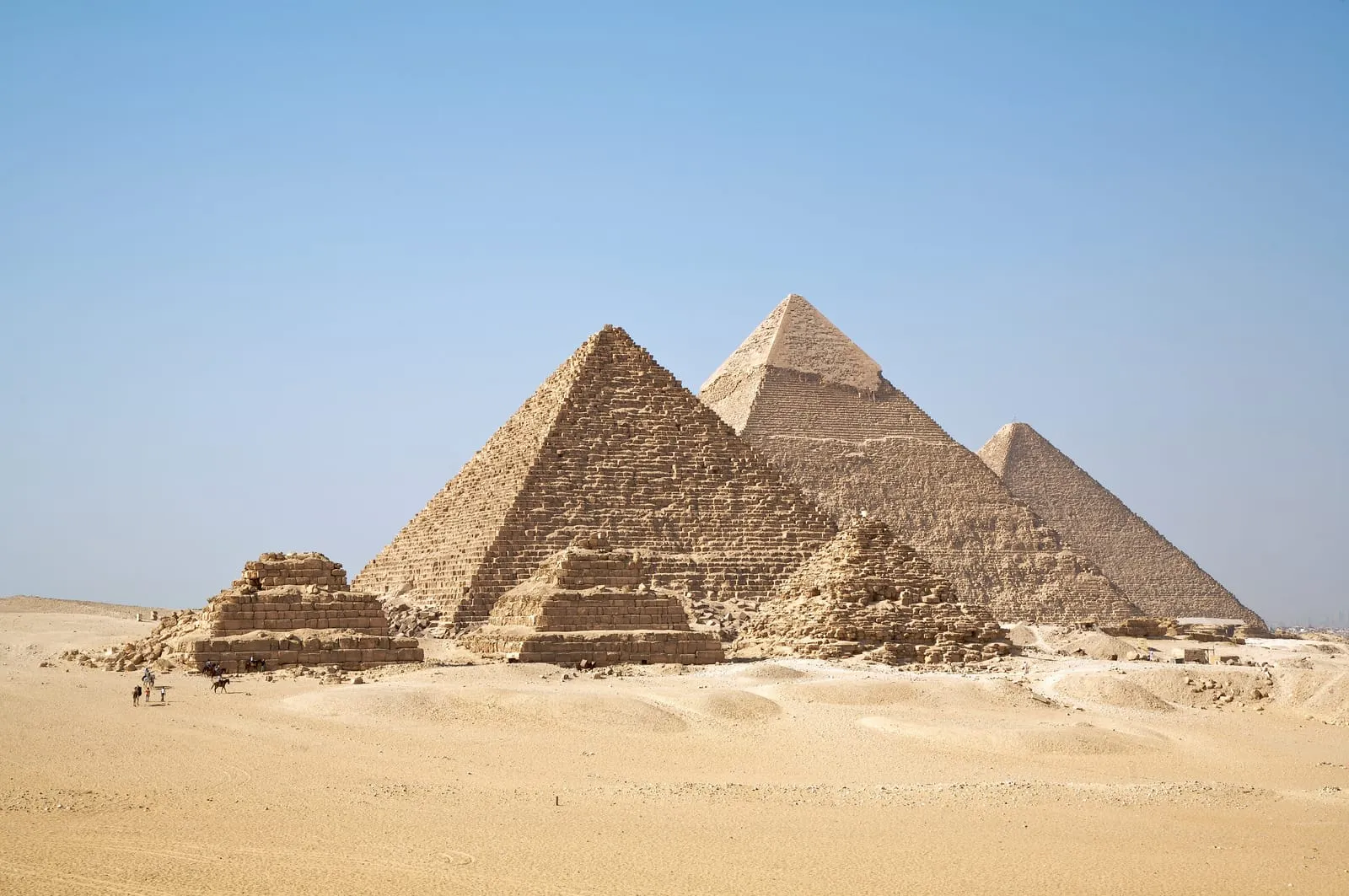
If you visit Jordan, don’t miss the Dead Sea as well. And for lovers of ancient wonders: How were the pyramids built?
Frequently asked questions
Which people built Petra?
The Nabataeans, an ancient Arab people known for trade, who made Petra the capital of their kingdom.
Why is Petra called the Rose City?
Because of its sandstone cliffs, whose colours range from pink to red and orange and shift with the sunlight.
Where is Petra?
In Ma’an Governorate in southern Jordan, next to the town of Wadi Musa. It’s roughly a three-hour drive from the capital, Amman.
Is Petra one of the Seven Wonders of the World?
Yes. It was chosen as one of the New Seven Wonders of the World in a global vote in 2007.
Key takeaway
The Nabataeans built Petra as their capital, and it flourished between the 1st century BC and the 1st century AD thanks to caravan trade. They carved the Treasury and other facades straight into the rose-coloured rock and engineered a remarkable water system. Today Petra is one of the New Seven Wonders of the World.