How Are Exchange Rates Determined? A Simple Guide
What is an exchange rate and what moves the dollar? A plain-English guide to supply and demand, fixed vs floating rates, and buy vs sell prices.
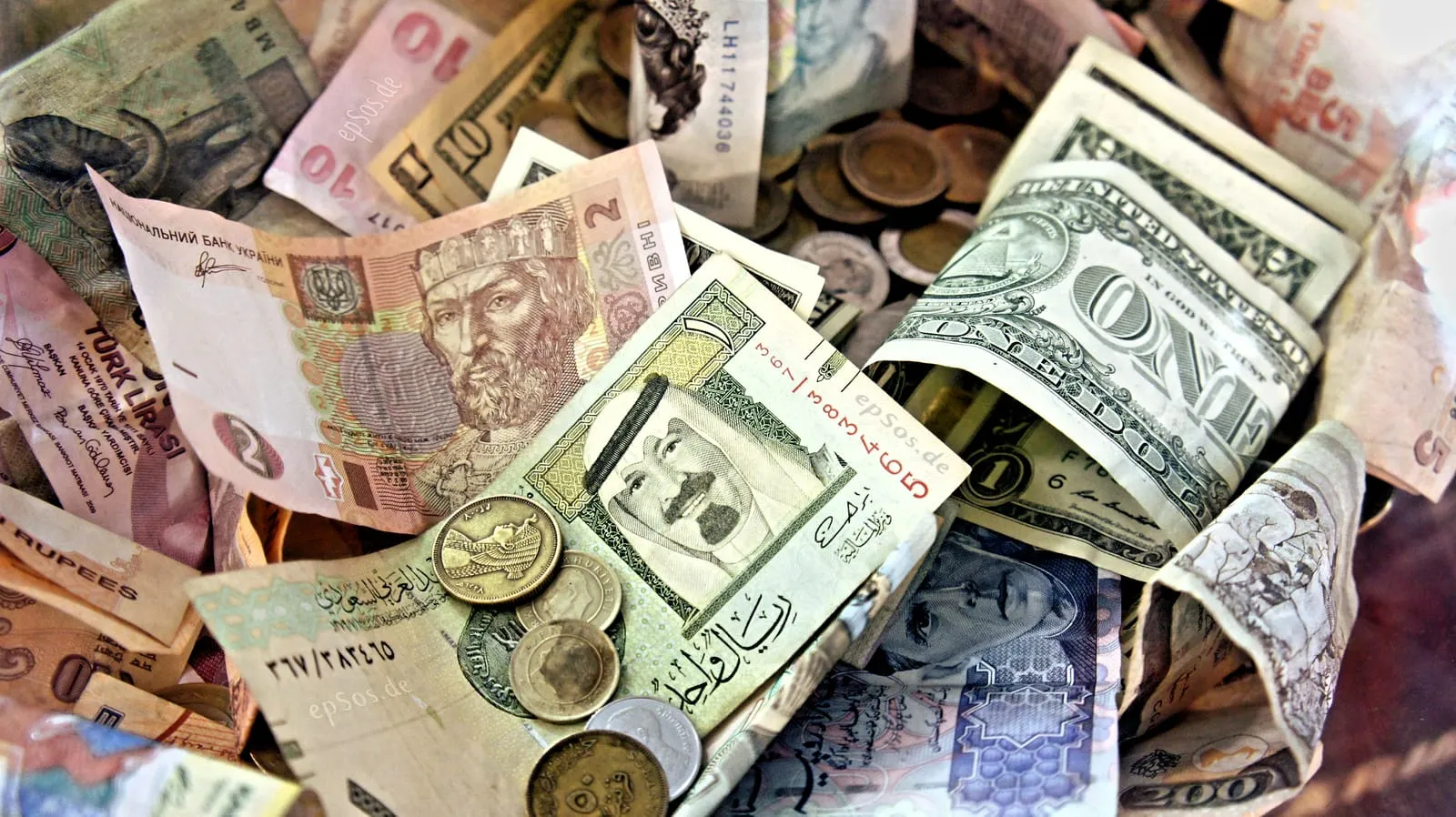
Millions of people check “dollar rate today” every day, yet few know how exchange rates are determined in the first place, or why one currency barely moves for decades while another changes by the minute. This guide explains the basics in plain English, so the numbers on bank screens and exchange-office boards start to make sense.
This article is general financial education only. It contains no currency forecasts or investment advice.
What is an exchange rate?
An exchange rate is the price of one currency in terms of another. If one US dollar equals 3.75 Saudi riyals, you need 3.75 riyals to buy a single dollar.
The US dollar is the world’s main currency for international trade and central bank reserves, so most currencies are quoted against it, and key commodities such as oil and gold are priced in it.
Supply and demand: the core idea
A currency behaves much like any other product: when demand for it rises, its price goes up; when supply outpaces demand, its price falls. The main forces that shift demand for a country’s currency are:
| Factor | How it works |
|---|---|
| Interest rates | Higher rates attract investors, increasing demand for the currency |
| Inflation | High inflation erodes a currency’s purchasing power over time |
| Trade balance | A country that imports more than it exports needs more foreign currency to pay for those imports |
| Tourism and remittances | Money from visitors and workers abroad brings in foreign currency and supports the local one |
| Central bank reserves | Large foreign reserves give a central bank firepower to defend its currency |
| Confidence and stability | Investors prefer the currencies of stable economies |
That’s why exchange rates are closely tied to inflation and to the interest rates set by central banks.
Fixed vs floating exchange rates
Countries don’t all manage their currencies the same way. There are two main systems, with various hybrids in between.
Fixed (pegged) exchange rates
The central bank sets a fixed price for its currency against another, usually the dollar, and buys or sells dollars from its reserves to hold that level. Well-known examples in the Arab world:
- Saudi riyal: pegged at 3.75 per dollar since 1986, according to the Saudi Central Bank.
- Qatari riyal: pegged at 3.64 per dollar.
- Jordanian dinar: pegged since the mid-1990s at about 0.709 per dollar.
A peg brings stability and makes planning easier for families and businesses, but it requires large foreign-currency reserves to maintain.
Floating exchange rates
Here the market sets the price through supply and demand, so it changes daily, or even by the second. The euro, yen and British pound all float against the dollar. In the Arab world, Egypt’s central bank moved to a flexible, market-determined exchange rate in March 2024.
A floating rate absorbs economic shocks automatically, but its swings can push up the prices of imported goods.
Did you know? Global currency trading reached about $9.6 trillion per day in April 2025, according to preliminary figures from the Bank for International Settlements’ survey, and the US dollar was on one side of roughly 89% of all trades.
Why are buying and selling prices different?
At any bank or exchange office you’ll see two prices:
- Buy rate: what the bank pays you for your dollars.
- Sell rate: what the bank charges you for dollars, which is always higher.
The gap between them is the spread, the dealer’s margin for providing the service. That’s why the rate you actually get can differ from the “official” or mid-market rate shown in the news or on search engines, so it pays to compare a few licensed providers before you exchange money.
How exchange rates affect everyday life
- Shop prices: when the local currency weakens, imported goods such as phones, cars and some foods get more expensive.
- Travel and studying abroad: a strong currency makes trips cheaper; a weak one makes them pricier.
- Remittances: families receiving money from abroad get more local currency when the local currency weakens.
- Online income: if you earn money online in dollars, the value of your income in local currency shifts with the exchange rate.
Frequently asked questions
Who sets the dollar rate in a country?
Under a peg, the central bank sets and defends it. Under a floating system, market supply and demand set it, though the central bank may still step in at times.
Is a rising dollar always bad?
Not necessarily. A weaker local currency makes imports dearer, but it can also boost exports and tourism, because they become cheaper for foreigners.
What’s the difference between the official rate and the parallel market?
The official rate is what licensed banks quote. A parallel (black) market usually appears when foreign currency is scarce; it’s illegal in many countries and carries a real risk of fraud.
Can anyone predict tomorrow’s exchange rate?
No one can forecast currency moves reliably, because they react to many sudden factors. Be wary of anyone promising guaranteed profits from currency trading.
Key takeaway
An exchange rate is simply the price of one currency in another. It’s set either by a central bank (a fixed peg) or by market supply and demand (a floating rate). Understanding the forces behind it, such as interest rates, inflation and the trade balance, helps you follow economic news and make better-informed money decisions.
This article is for general education and is not financial or investment advice.