How Does Rain Form? The Science of a Raindrop, Simply
How does rain form in clouds? A simple guide to the water cycle, condensation, how droplets grow until they fall, types of rainfall, and rain vs hail vs snow.
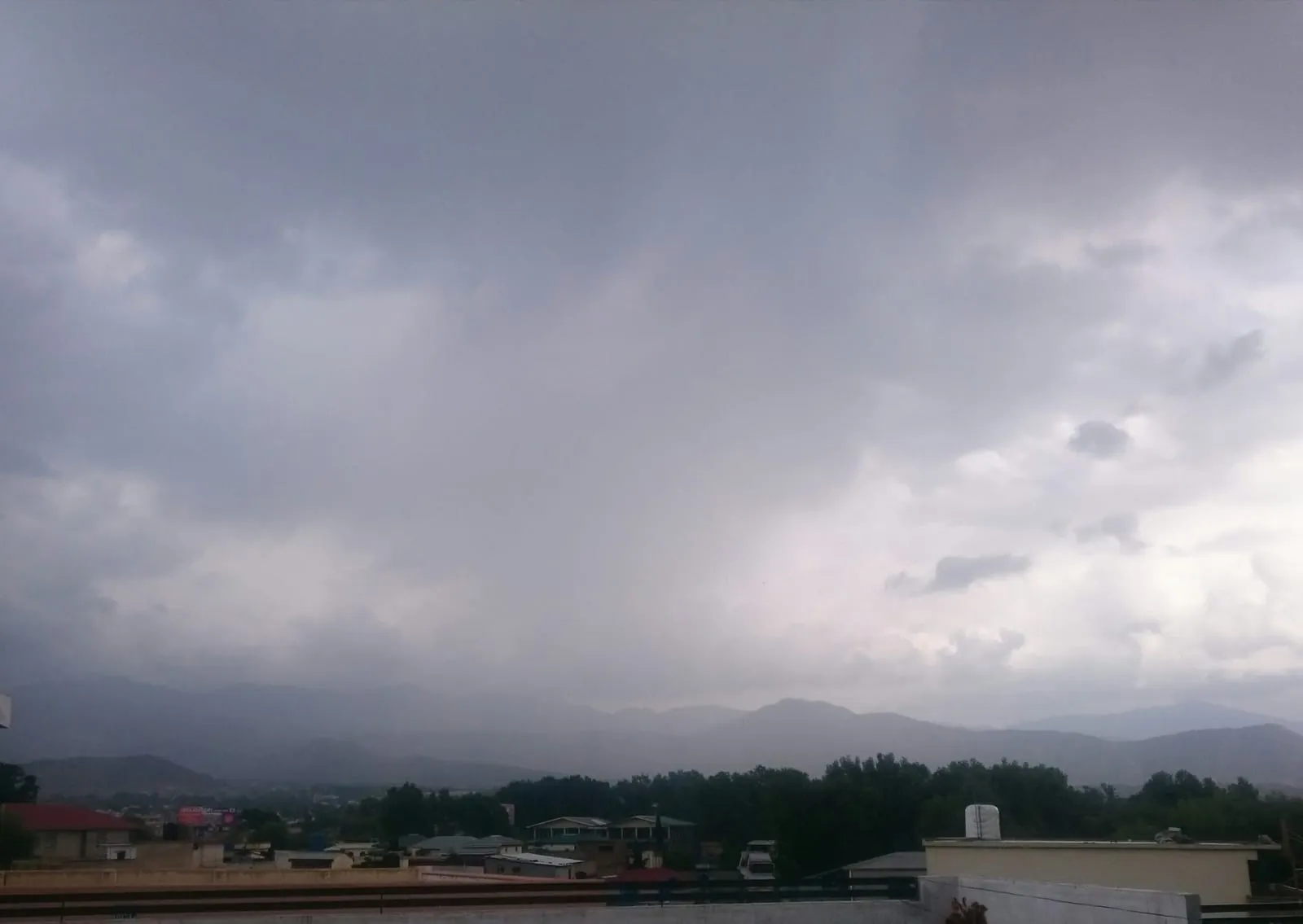
As the rainy season returns to many parts of the world, searches for “rain” and “weather tomorrow” climb fast. But have you ever stopped to ask how rain forms in the first place? How does water climb from the sea into the sky and come back down as drops? Here’s the whole journey, step by step, explained simply enough for adults and students alike.
The water cycle: where does rainwater come from?
Rain is part of the water cycle, a journey that never stops:
- Evaporation: the Sun warms seas, oceans and lakes, turning some of the water into invisible water vapour that rises with the air. Plants release vapour from their leaves too (transpiration).
- Condensation: air cools as it rises, and the vapour turns into tiny droplets that make up clouds.
- Precipitation: droplets grow until they’re heavy enough to fall as rain, snow or hail.
- Collection: water flows back to rivers and seas or soaks into the ground to refill groundwater, and the cycle starts again.
How do clouds form?
Warm air can hold more water vapour than cold air. When moist air rises, it expands and cools. At a certain temperature, called the dew point, it can no longer hold all its vapour, and condensation begins.
But vapour needs a surface to condense on. That’s the job of condensation nuclei: tiny particles of dust, sea salt and smoke floating in the air. Vapour gathers around them to form cloud droplets, each far smaller than a pinhead.
How does rain form in clouds?
Cloud droplets are so small and light that rising air keeps them aloft. A droplet has to grow roughly a million times in volume to become a raindrop that falls. That happens in two main ways:
1. Collision and coalescence (warm clouds)
Droplets move around inside the cloud, bump into each other and merge. Bigger drops fall faster and sweep up more droplets on the way, until they’re too heavy for the rising air to support, and they fall as rain. This is common in warm tropical regions.
2. The ice-crystal process (cold clouds)
High in many clouds the temperature is below freezing, so ice crystals sit alongside “supercooled” water droplets that haven’t frozen yet. The ice crystals grow quickly at the droplets’ expense, then fall. If they pass through warmer air, they melt and arrive as rain; if the air stays cold all the way down, they arrive as snow. Scientists call this the Bergeron process, and it produces most of the rain in mid-latitude regions.
Did you know? Raindrops aren’t teardrop-shaped, despite how we draw them. Small drops are nearly round, while larger ones get flattened underneath by air resistance as they fall, looking more like a bean or a hamburger bun.
Types of rainfall
| Type | What lifts the air | Example |
|---|---|---|
| Convectional | The Sun heats the ground and warm air shoots upwards | Summer showers and tropical thunderstorms |
| Orographic (relief) | Moist air hits mountains and is forced up | Rain on the windward slopes of coastal mountain ranges |
| Frontal (cyclonic) | Warm air meets cold air and rides up over it | Most winter rain in the Mediterranean and Western Europe |
When air rises very violently, you get thunderstorms, with lightning, thunder and sometimes hail.
Rain vs snow vs hail
- Rain: drops of liquid water.
- Snow: six-sided ice crystals that didn’t melt on the way down.
- Hail: hard balls of ice formed inside thunderclouds, when strong updrafts carry drops up again and again, adding layer after layer of ice.
Forecasters use satellites and radar to work out when and where rain will fall, as we explain in how weather forecasts are made.
Frequently asked questions
How does rain form, for kids?
The Sun warms water so it evaporates and rises into the sky. Up there it cools and turns into tiny drops that make clouds. The drops join together and grow until they’re heavy, and then they fall to the ground as rain.
Why don’t all clouds produce rain?
In many clouds the droplets stay too small to fall, or they evaporate in dry air before they reach the ground.
What is acid rain?
Rain that is more acidic than normal because of polluting gases such as sulphur dioxide and nitrogen oxides from burning fuel. It can damage trees, lakes and buildings.
What is artificial rain (cloud seeding)?
An attempt to increase rainfall by spreading substances such as silver iodide or salts into clouds to act as condensation nuclei. It can’t make rain from a clear sky; suitable clouds have to be there already.
Key takeaway
Rain forms when water evaporates and rises, cools and condenses around tiny particles to build clouds, and the droplets grow, by colliding or through ice crystals, until they’re heavy enough to fall. That completes the water cycle that keeps our planet alive.